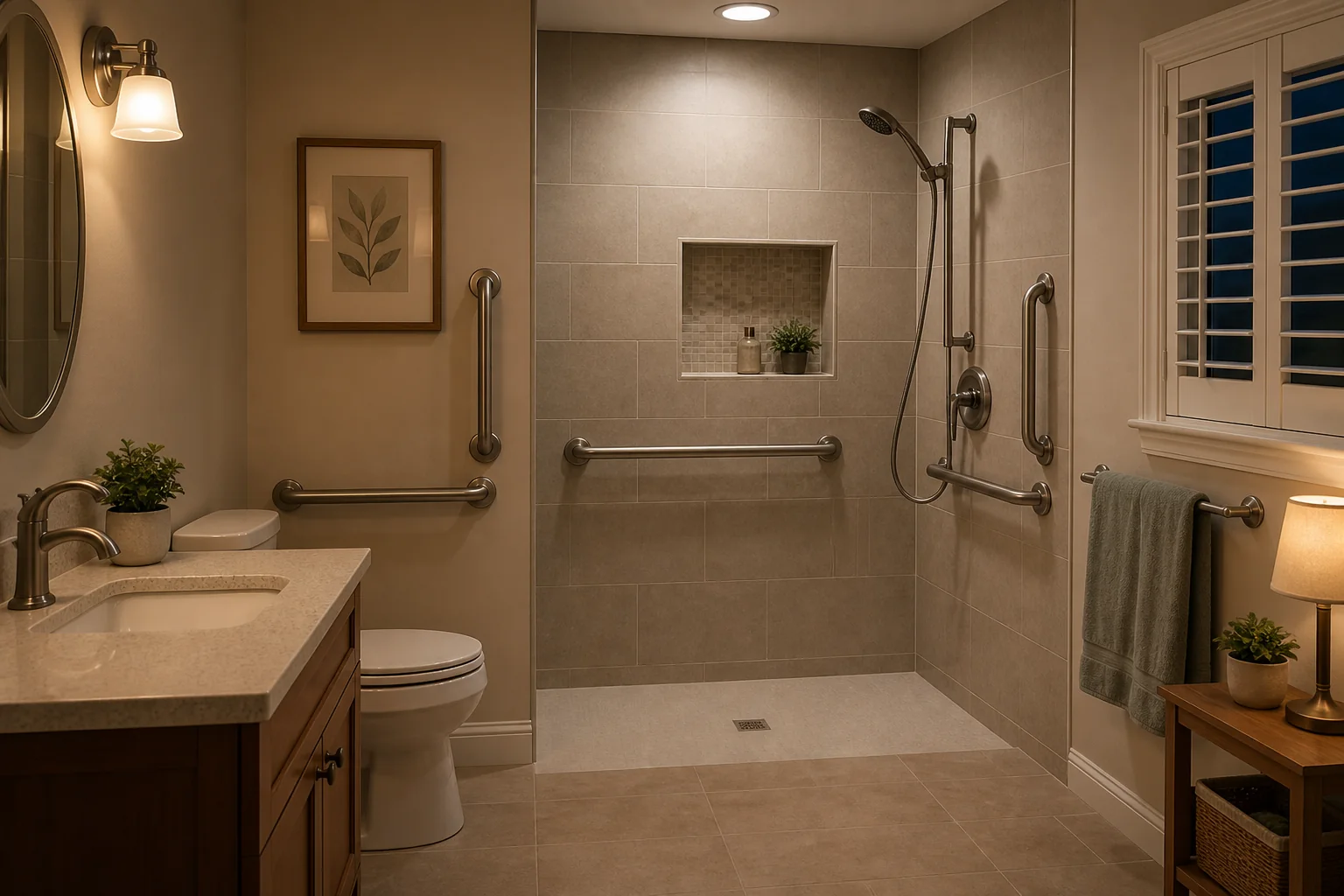
What should you change first for safer aging in place?
Start with the places where a fall is most likely or most consequential: the bathroom, the route from the bedroom to the bathroom, steps and thresholds, and the main entry. You do not need to remodel the whole house at once. A short, prioritized list is usually more useful than a catalog of every accessibility product on the market.
The CDC recommends practical home changes such as grab bars near the toilet and shower, railings on both sides of stairs, and better lighting. Those are good first priorities because they address everyday movements rather than rare situations.
My Safe Living / Aging-in-Place service covers handyman-sized safety improvements for North Valley, Peoria, Glendale, Surprise, and Sun City homeowners. If a project requires structural remodeling, plumbing relocation, new electrical work, or permitting, I will say so and point you toward the licensed trade the job needs.
Begin with the bathroom
Wet floors, tight turns, and the need to sit, stand, and step over an edge make bathrooms an obvious place to start.
Grab bars must be mounted into real structure
A grab bar is support hardware, not a towel bar. Its location should match how the person actually enters the shower, stands from the toilet, or moves around the room. It also needs the correct fastener and solid backing for the wall construction. A decorative bar held only by light-duty drywall anchors can create false confidence.
Before installation, I look at the wall, likely stud locations, fixture placement, and the user’s reach. Tile and unusual wall assemblies may change the hardware or make a specialist the better choice.
Reduce slips and awkward movements
Depending on the person and bathroom, useful changes can include:
- A properly placed shower seat
- A handheld showerhead within easy reach
- A secure nonslip surface
- A clear path with bathmats that do not curl or slide
- A night-light or motion-activated light for after-dark trips
A tub-to-walk-in-shower conversion is a larger remodeling project involving waterproofing and often plumbing. That is not handyman work; it belongs with qualified, licensed professionals.
Make the nighttime route easier to navigate
A bright room is not enough if the switch is across the room. Look at the complete path from bed to bathroom: where someone gets up, turns, crosses a threshold, and reaches for a door.
Plug-in night-lights are a simple start. Motion-triggered lighting, smart bulbs, or low-level pathway lighting can remove the need to search for a switch. The best setup is predictable and simple. A complicated app is not an upgrade if the person living there cannot comfortably use it.
My smart-home setup service can help with lighting, doorbells, locks, and voice control when those devices genuinely make daily routines easier. For a plain-language look at the options, see my Phoenix smart-home guide.
Remove trip hazards room by room
Walk the home at the resident’s normal pace and look down as well as ahead. Common problems include loose rugs, curled carpet edges, cords crossing a walkway, clutter near furniture, and abrupt flooring transitions.
Also check:
- Handrails for movement or loose fasteners
- Frequently used items stored too high or too low
- Furniture that narrows the normal walking path
- Exterior walkways with poor lighting
- Door thresholds that catch a shoe, cane, or walker
Some fixes are as small as securing a cable or moving a lamp. Others, such as changing floor levels, widening doors, or building a code-compliant ramp, may require a remodeling contractor.
Choose hardware that is easier to use
Lever handles are often easier to operate than round knobs. Rocker-style switches can be easier than small toggles. A video doorbell can let someone see and speak with a visitor without hurrying to the door. A keypad lock can reduce fumbling with keys, but it should still have a clear backup plan for power or connectivity problems.
Technology should simplify the house, not turn it into a support ticket. I favor devices with clear controls, reliable local operation where practical, and a setup the homeowner and family understand.
When should you bring in an occupational therapist?
If mobility, vision, balance, or recovery needs are changing, an occupational therapist can evaluate how the person actually moves through the home and recommend changes specific to them. That clinical perspective is different from an installer’s. I can install appropriate handyman-scale hardware after the locations and goals are clear, but I do not provide medical or clinical assessments.
A practical way to plan the work
Make three lists:
- Fix now: loose rails, poor lighting, sliding rugs, and missing support at critical transfers.
- Improve soon: easier handles, pathway lighting, a video doorbell, or better storage placement.
- Plan with a specialist: ramps, doorway changes, shower conversions, or work involving plumbing and electrical systems.
That keeps urgent safety items from getting buried inside a large wish list.
Aging-in-place questions
Can HandyMack install grab bars?
Yes, when the wall construction and mounting location support a safe handyman-scale installation. I inspect the surface and mounting options first. If the job needs wall reconstruction, specialized reinforcement, or other licensed work, I will tell you before proceeding.
Do smart-home devices work for older adults?
They can, especially for lighting, door visibility, reminders, and easier control. The right answer depends on comfort with technology, internet reliability, and whether there is a simple manual backup.
What areas does HandyMack serve for aging-in-place work?
I am based in Phoenix’s North Valley and serve Stetson Valley, Deer Valley, Peoria, Glendale, Surprise, Sun City, and nearby Phoenix metro neighborhoods. Scottsdale is considered case by case.
If you have a short list of safety upgrades, book a visit and tell me which movements or rooms are causing concern. I will help separate the straightforward fixes from the projects that need a licensed specialist.