The Phoenix monsoon officially runs June 15 through September 30, and the part most people miss is that the damage almost never shows up during the storm. A gust pushes a gate out of square, water finds a gap around an outlet, dust packs into a camera seam, and everything looks fine until the next problem stacks on top of it. By the time you notice, it has been quietly getting worse for a month.
I do a short walk-around on my own house in Stetson Valley every September, before the season closes out. It takes about twenty minutes and it is mostly looking, not fixing. Here is the version I would hand a neighbor.
Start with the fences and gates
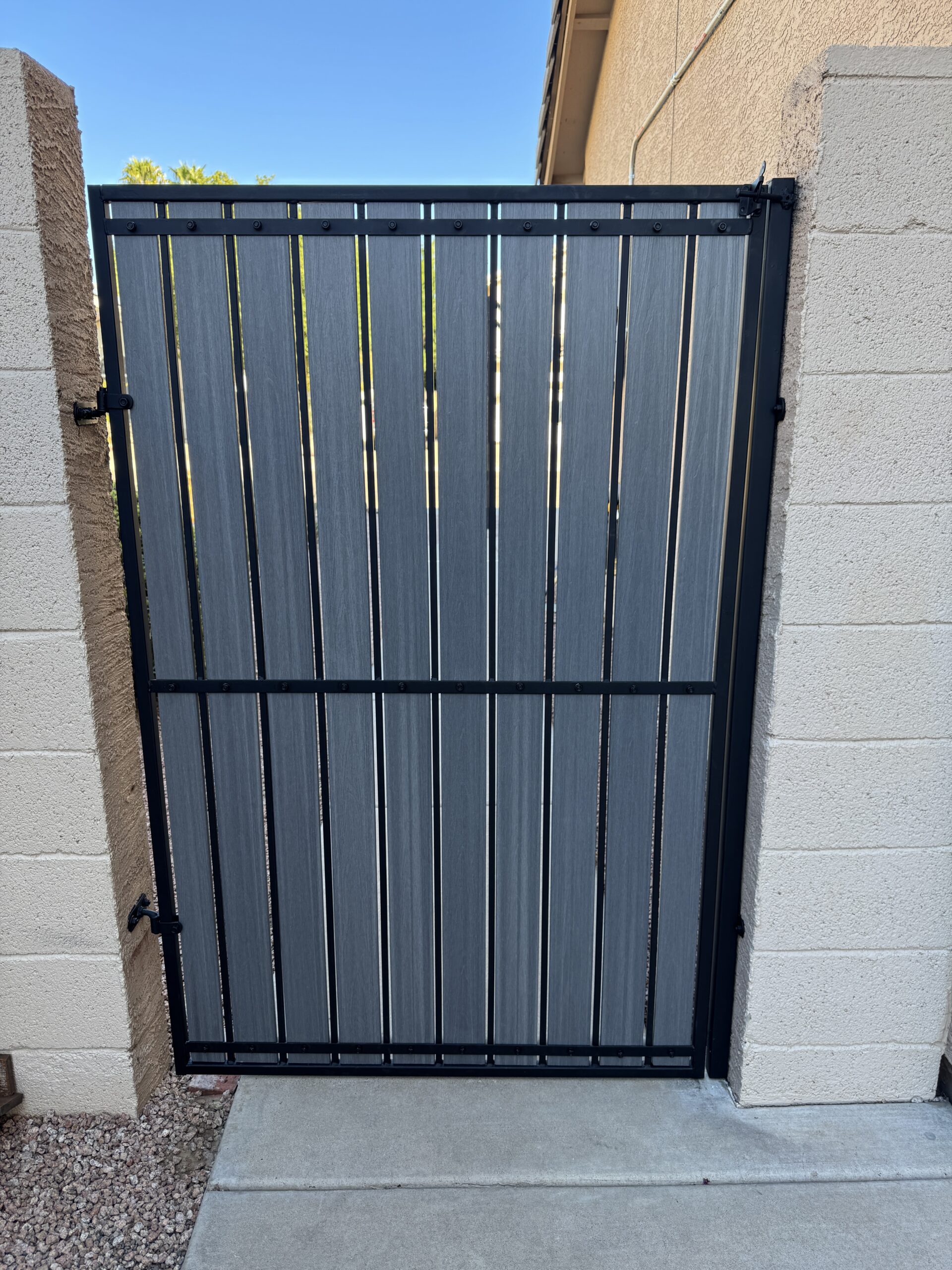
Wind is the monsoon's most reliable trick, and fences take the brunt of it. Walk your back and side yard and grab each gate at the latch side. A gate that sags, drags on the concrete, or no longer lines up with the latch has usually pulled its hinges loose in a gust, and every time you yank it shut after that you make it a little worse.
Block walls take dust and water at the base. Look for a new crack running up from the footing, or a section that has started to lean since spring. A hairline crack is normal Phoenix settling. A crack you can fit a pencil into, or a wall that is visibly out of plumb, is worth a real look before the ground shifts again.
Test every GFCI outlet outside
This is the one people skip, and it is the one that matters most for safety. Every exterior outlet in Phoenix, the ones by the patio, the pool equipment, the front hose bib, is supposed to be a GFCI: the outlet with the little TEST and RESET buttons. That circuit is what shuts the power off in a fraction of a second if water gets where it should not.
Monsoon moisture and dust are exactly what wear these out. Press TEST on each one. The power should cut immediately, and RESET should bring it back with a firm click. If pressing TEST does nothing, or RESET will not hold, the outlet is not protecting you anymore and should be replaced. That is a same-day fix, and it is the difference between a tripped circuit and a real shock hazard the next time a storm blows through.
Check the outdoor electronics before you blame the device
Doorbell cameras, backyard cameras, and outdoor speakers all take the same beating: 150-degree wall heat all summer, then dust driven into every seam by a haboob, then water behind the dust when the rain finally comes. If any of them started dropping offline in July or August, the odds are good the device is fine and the mount, the seal, or the Wi-Fi signal is the actual problem.
Wipe the lens and the gasket, make sure the mount is still tight, and watch whether the connection holds. A camera at the far corner of the lot or out by the back gate is often just past where the Wi-Fi reaches, and no amount of replacing the camera fixes a signal that dies before it gets there.
Look at irrigation and where the water went
Phoenix monsoon rain does not soak in gently. It comes fast, runs across hard summer ground, and pools wherever the grade lets it. Walk the yard and notice where water clearly stood: against the house foundation, around the base of a block wall, over a drip line. Standing water against the slab is worth correcting before it becomes a habit.
While you are out there, check your drip irrigation. Storms shift emitters and expose or break lines, and a cracked line will happily run up your September water bill without you seeing a drop. Run a cycle and walk it once.
Do a ground-level roof and gutter look
You do not need to get on the roof, and in Phoenix heat you should not want to. From the ground, look up at the roofline for a tile that has slipped out of line or a section of flashing that has lifted. If you have gutters, check that the downspouts are clear and still pointed away from the foundation, because monsoon dust and palo verde debris clog them fast.
Anything that looks off from the ground is worth having someone with the right ladder and the right footwear look at properly. A slipped tile is cheap to reset now and expensive to ignore into next summer.
What to fix now, and what can wait
Most of this list is a twenty-minute look, and most years you find one or two small things. The ones worth handling before the season ends September 30 are the safety items: a failed GFCI outlet, a gate that has become a hazard, standing water against the foundation. The cosmetic and convenience items can wait for the cooler weeks ahead, which is exactly when the outdoor work gets pleasant again anyway.
If your walk-around turns up a list, that is normal, and it is the kind of list that is faster to knock out in one visit than to chip at one weekend at a time. I handle the handyman side and the tech side together, so a loose gate, a dead GFCI, and a camera that will not stay online are one appointment, not three.
Want this handled in one visit? HandyMack serves the Phoenix North Valley, including Stetson Valley, Deer Valley, Peoria, Surprise, Sun City, and Glendale. Book a visit, send a few photos of what you found, and I will tell you what makes sense before you spend money.