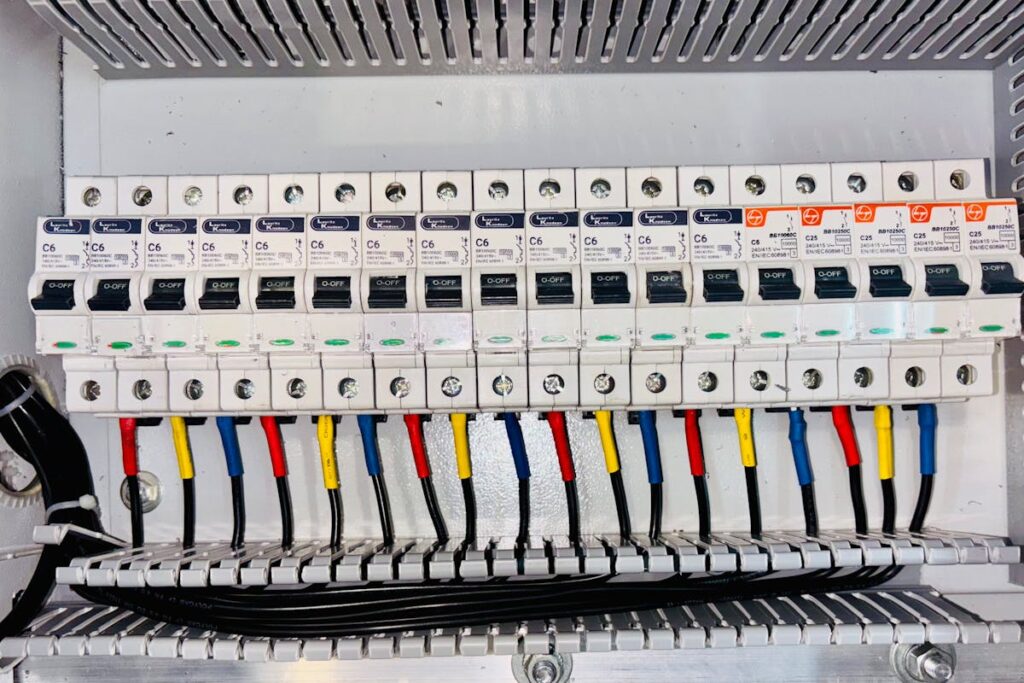
The Brain of Your Home Electrical System
Your electrical panel, often called a breaker box or load center, is one of the most important components in your home. It receives power from the utility company and distributes it to every circuit in your house. Despite its importance, most homeowners never think about their electrical panel until something goes wrong, and by then, the situation may already be dangerous or costly.
Understanding the basics of how your panel works, recognizing warning signs of trouble, and knowing when to call a professional can protect your home, your family, and your wallet.
How Your Electrical Panel Works
Power from the utility company enters your home through the meter and feeds into the main breaker at the top of your panel. This main breaker controls all power to the house and is rated for the total capacity of your panel, typically 100, 150, or 200 amps in residential homes.
From the main breaker, power is distributed to individual circuit breakers, each protecting a specific circuit in your home. Bedroom outlets might be on one 15-amp circuit, the kitchen on a dedicated 20-amp circuit, and your air conditioner on its own 30 or 40-amp circuit. When a circuit draws more power than its breaker is rated for, the breaker trips and cuts power to that circuit, preventing overheating and potential fire.
Understanding GFCI and AFCI Protection
GFCI (Ground Fault Circuit Interrupter)
GFCI protection prevents electrical shock by monitoring the current flowing through a circuit. If it detects even a tiny imbalance, meaning electricity is flowing through an unintended path such as through water or a person, it cuts power in a fraction of a second.
GFCI protection is required by code in bathrooms, kitchens, garages, outdoor areas, laundry rooms, and anywhere near water. It can be provided by GFCI outlets at the point of use or by GFCI breakers in the panel. Older Phoenix homes may not have GFCI protection in all required locations, creating a real safety hazard.
Test your GFCI outlets monthly by pressing the test button. The outlet should immediately lose power. Press reset to restore it. If a GFCI outlet does not trip when tested, it needs to be replaced immediately.
AFCI (Arc Fault Circuit Interrupter)
AFCI breakers detect dangerous electrical arcs, the kind that occur when wiring is damaged, connections are loose, or cords are frayed. These arcs generate intense heat that can ignite surrounding materials, making them a leading cause of electrical fires. Modern building codes require AFCI protection on most household circuits, but homes built before 2014 likely do not have them.
Upgrading to AFCI breakers is one of the most impactful safety improvements you can make, especially in older homes where wiring may have degraded over the decades.
Warning Signs Your Panel Needs Attention
Your electrical panel communicates problems if you know what to look for. Here are warning signs that should prompt immediate professional evaluation:
- Breakers that trip frequently: An occasional trip is normal, especially if you overload a circuit with too many devices. But if a breaker trips repeatedly, it may indicate a wiring problem, a failing breaker, or an overloaded circuit that needs to be split.
- Burning smell near the panel: This is a serious warning sign indicating overheating connections, melting wire insulation, or a failing breaker. Do not ignore this. Turn off the main breaker and call an electrician immediately.
- Scorch marks or discoloration: Any visible heat damage on the panel, breakers, or surrounding wall indicates a serious problem that has already occurred.
- Buzzing or humming sounds: A properly functioning panel is silent. Buzzing indicates loose connections or a failing breaker, both fire hazards.
- Warm or hot breakers: While it is normal for breakers to be slightly warm during heavy use, a hot breaker indicates a problem. Never touch a breaker with wet hands; use the back of your dry hand to feel for unusual heat.
- Rust or moisture inside the panel: Water and electricity are a dangerous combination. Moisture inside your panel can cause corrosion, short circuits, and shock hazards.
When Your Panel Needs an Upgrade
Many Phoenix homes, especially those built in the 1970s through 1990s, have 100-amp panels that were adequate for the electrical demands of that era. Modern homes with central AC, electric water heaters, multiple large appliances, EV chargers, and home offices need 200 amps or more.
Signs your panel capacity is insufficient include:
- Running out of breaker slots: If every slot is full and you need to add a new circuit, it is time for a panel upgrade rather than using tandem breakers as a workaround.
- Your AC and appliances dim lights when they kick on: This voltage dip indicates your panel is struggling to deliver enough power.
- You are adding a major load such as an EV charger, hot tub, workshop, or home addition that exceeds your current panel capacity.
- You have a Federal Pacific, Zinsco, or Pushmatic panel: These brands have well-documented safety issues and should be replaced regardless of your power needs.
Electrical Safety Rules Every Homeowner Should Follow
- Never work inside your electrical panel unless you have specific training. The main lugs at the top of the panel are always energized, even when the main breaker is off, and carry lethal voltage.
- Label your breaker panel. Every breaker should be clearly labeled with the room or circuit it controls. This is critical during emergencies when you need to quickly cut power to a specific area.
- Keep the area around your panel clear. Building codes require 36 inches of clearance in front of the panel. Do not store items in front of it.
- Never use a higher-rated breaker to stop a circuit from tripping. The breaker is sized to protect the wire. A larger breaker allows more current than the wire can safely carry, creating a fire hazard.
- Schedule a professional electrical inspection if your home is more than 25 years old, you have recently purchased the home, or you are planning any major renovation.
HandyMack Electrical Services
At HandyMack Tech & Home Services, we handle a range of electrical tasks for Phoenix homeowners, from installing GFCI outlets and replacing light fixtures to running new circuits and upgrading switches. For more complex panel work and major electrical upgrades, we work with licensed electricians to ensure everything is done to code and inspected properly.
Concerned about your electrical panel or need an electrical safety assessment? Contact HandyMack today. Your safety is always worth the call.