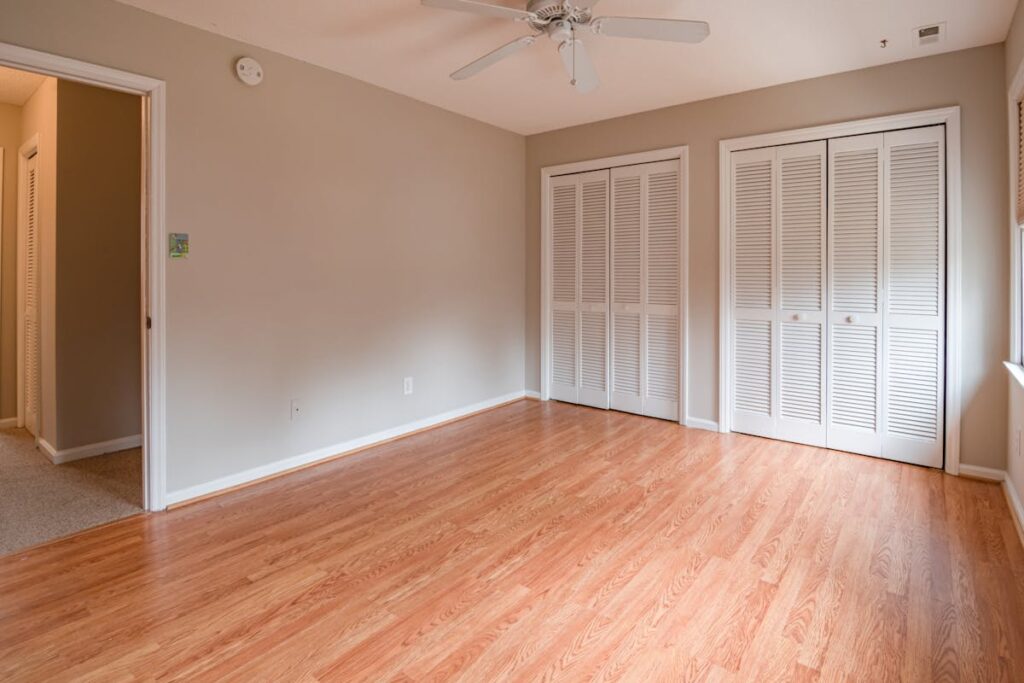
The Unsung Hero of Energy Savings
In Phoenix, where air conditioning runs for six months or more each year, anything that reduces your cooling costs is worth considering. Ceiling fans are one of the simplest, most cost-effective upgrades you can make to your home, and they pay for themselves faster than almost any other home improvement.
A ceiling fan does not actually lower the temperature in a room. Instead, it creates a wind-chill effect that makes you feel 4 to 8 degrees cooler. This means you can set your thermostat higher by several degrees while maintaining the same comfort level, and every degree you raise your thermostat saves roughly 3 percent on your cooling bill.
How Much Can You Really Save?
Let us do some simple math. If your average summer electric bill is $300 per month and you raise your thermostat by 4 degrees thanks to ceiling fans, you could save around $36 per month, or over $200 across the cooling season. A quality ceiling fan costs $150 to $400, and professional installation adds another $100 to $250 depending on your existing wiring. That means your ceiling fans can pay for themselves in a single summer.
Compare that to the cost of running the fans themselves. A standard ceiling fan uses about as much electricity as a 75-watt light bulb. Running it 12 hours a day costs roughly $2 to $3 per month. The energy savings from raising your thermostat far outweigh the cost of running the fans.
Choosing the Right Fan for Your Room
Ceiling fans are not one-size-fits-all. The size of the fan needs to match the size of the room for optimal airflow.
- Small rooms (up to 75 sq ft): 29 to 36 inch blade span. Ideal for bathrooms, closets, and small offices.
- Medium rooms (76 to 144 sq ft): 36 to 42 inch blade span. Perfect for bedrooms and small living areas.
- Large rooms (144 to 225 sq ft): 44 to 50 inch blade span. Standard for master bedrooms and living rooms.
- Great rooms (over 225 sq ft): 52 to 60+ inch blade span, or consider two fans. Open-concept living areas and great rooms benefit from larger fans or multiple installations.
For optimal performance, the fan blades should be 8 to 9 feet from the floor and at least 18 inches from any wall. In rooms with higher ceilings, a downrod brings the fan to the correct height.
Summer vs. Winter Mode
Most people do not realize that ceiling fans have a reverse switch for a reason. In summer, the blades should spin counterclockwise (when viewed from below) to push air straight down and create that cooling breeze. In winter, switch the fan to clockwise at a low speed. This pulls cool air up and pushes the warm air that collects near the ceiling down along the walls, redistributing heat without creating a draft.
Even in Phoenix, winter nights can get surprisingly cold, and using your ceiling fans in reverse during the cooler months helps your heating system work more efficiently.
When to Call a Professional
Ceiling fan installation ranges from straightforward to complex depending on your existing setup. Here is when you can consider a DIY approach versus when you need a professional:
Potentially DIY-Friendly
If you are replacing an existing ceiling fan with a new one and the existing electrical box is fan-rated, a handy homeowner with basic electrical knowledge might be able to handle the swap. The wiring connections are typically straightforward: black to black, white to white, green to green.
Definitely Call a Professional
- No existing electrical box: If you want a fan where there is currently no fixture, new wiring needs to be run from the switch to the ceiling location. This involves working in attic spaces, fishing wire through walls, and installing a new fan-rated electrical box.
- Standard light box (not fan-rated): A regular light fixture box cannot support the weight and vibration of a ceiling fan. It must be replaced with a fan-rated box that is secured to the ceiling joist. Using a non-rated box is a serious safety hazard.
- Adding a wall switch or fan control: If you want separate controls for the fan and light, or a variable speed wall control, additional wiring may be needed.
- Vaulted or angled ceilings: These require special mounting brackets and longer downrods, and the installation can be tricky to get right.
- Heavy fans: Large fans over 50 pounds require robust ceiling support and are unwieldy to install safely, especially while standing on a ladder.
Smart Fans: The Next Level
Modern ceiling fans are getting smarter. Wi-Fi enabled fans can be controlled with your phone or voice assistant, integrated into home automation routines, and even set to adjust speed automatically based on room temperature. Imagine your bedroom fan turning on automatically when the temperature rises above a certain threshold, or your living room fan activating when you say “movie time.”
If you are building out a smart home, smart ceiling fans are a natural addition that ties into your overall automation system.
HandyMack Ceiling Fan Installation
At HandyMack Tech & Home Services, we install ceiling fans throughout Phoenix-area homes every week. Our service includes verifying or upgrading your ceiling electrical box to a fan-rated box, assembling and installing your fan, balancing the blades for wobble-free operation, and confirming all controls work properly. We also handle any additional wiring needed for new installations or separate fan and light switch controls.
Most ceiling fan installations are completed within an hour or two, with minimal mess and no holes left behind. Ready to start saving on your energy bills? Contact HandyMack to schedule your ceiling fan installation and start feeling the difference.